
Anodizing properties
Sealing Treatments
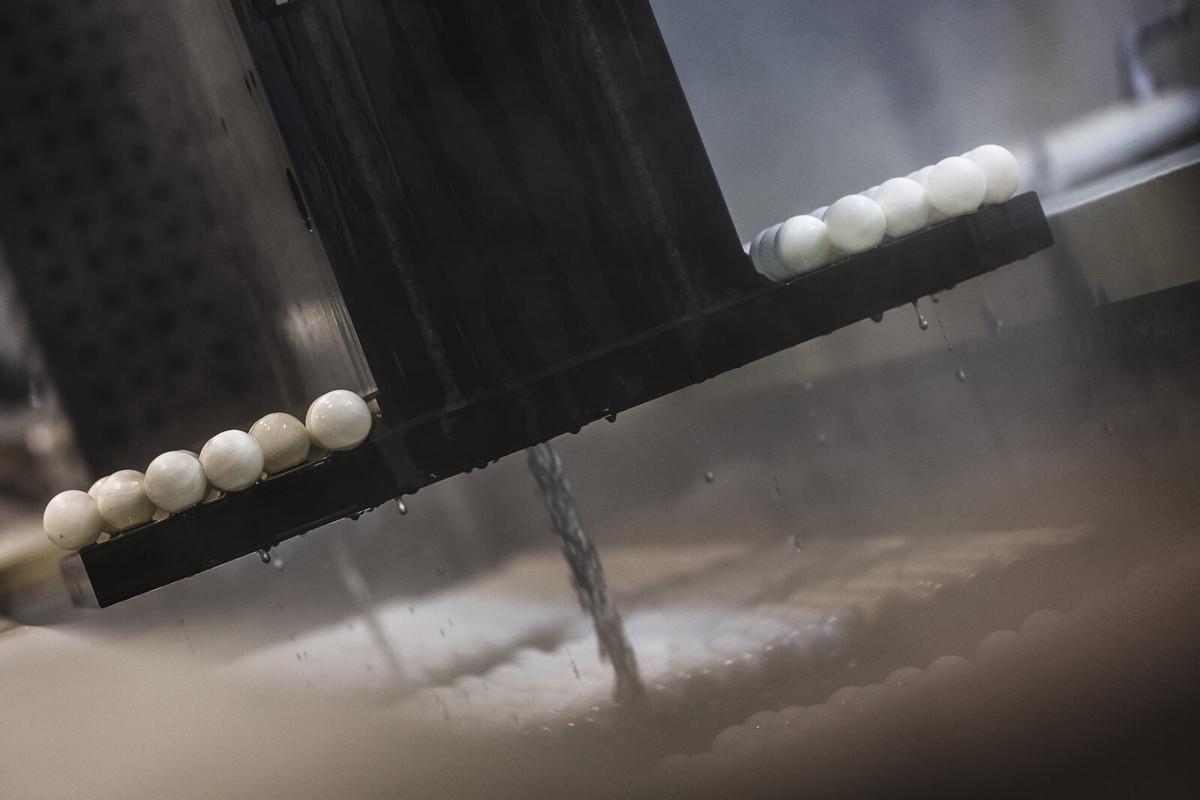
Sealing is a post-anodizing treatment that allows sealing the pores of the aluminum oxide layer, significantly increasing its corrosion resistance and stabilizing its properties over time.
The porous structure of the oxide layer
As described in the introductory section, the aluminum oxide formed by sulfuric anodizing has a honeycomb columnar structure, with hexagonal-shaped cells and a central porosity that extends through almost the entire depth of the layer.
This porous structure is fundamental to allow coloring with organic pigments, ensure coating adhesion to the base material, and enable uniform layer growth during the process.
However, porosity also represents the first potential trigger for corrosion: aggressive substances can penetrate into the pores and reach the underlying base material.
Hot sealing
Hot sealing is the most widespread and most effective treatment for sealing the pores of the anodizing layer. It consists of immersing the anodized part in deionized water at a temperature of approximately 95°C for an appropriate time.
Immersion in hot water causes a surface hydration of the aluminum oxide layer. During this process, aluminum oxide (Al₂O₃) absorbs water molecules and transforms into aluminum hydroxide (boehmite, AlO(OH)). Since the hydroxide has a larger volume compared to the original oxide, the resulting volumetric expansion mechanically closes the pores, making the structure more compact and impermeable.
Advantages
- Maximum corrosion resistance achievable (>1000 hours in salt spray possible)
- Eco-friendly process: uses only water, without hazardous chemicals
- Complete closure of pores
- Stabilizes pigments in case of coloring
- Reduces moisture absorption of the layer
- Improves chemical resistance
Disadvantages
- Possible reduction in surface wear resistance due to the chemical modification of the aluminum oxide layer.
Effect on corrosion resistance
Hot sealing significantly increases corrosion resistance. Although the anodizing treatment allows obtaining good corrosion resistance, hot sealing further increases it thanks to the mechanical closure of pores. With an optimized process, it is possible to achieve corrosion resistance exceeding 1000 hours in neutral salt spray.
When sealing is necessary
Sealing treatment becomes necessary in various situations. In particular, it is recommended when maximum corrosion resistance is required in aggressive environments, when the component will be exposed to chemicals (even non-aggressive ones), or when a coloring treatment has been performed to stabilize the pigments. Sealing is also mandatory for applications involving food contact according to EN 14392 standard. Finally, it is recommended when it is necessary to prevent the ingress of substances into the pores of the anodic layer, such as oils that can penetrate and stain the surface.
Food contact - EN 14392
The EN 14392 standard "Requirements for anodized products for use in contact with foodstuff" specifies that for components intended for food contact, sealing is mandatory.
The EN 14392 standard establishes that the aluminum alloy used must comply with EN 601 or EN 602, and that the anodizing treatment must be followed by sealing. The latter must be performed exclusively hot in water, while the use of nickel salt-based sealing is not permitted.
The mandatory nature of sealing for food applications is motivated by the need to prevent the release of aluminum or other elements to the food through the pores, ensure the stability of the coating over time, prevent the absorption of substances from the food into the pores, and maximize chemical resistance to acidic or saline substances present in foods.
For more details on food compliance, consult the Chemical Resistance section.
For a detailed analysis of regulations, technical requirements, and best practices for anodizing intended for food contact, consult the in-depth article Anodizing and Food Contact
Other critical applications
Sealing is also strongly recommended for:
- Components in marine environments (maximum corrosion)
- Medical and pharmaceutical applications
- Exposure to even moderate chemicals
- Colored anodizing (pigment stabilization)
- Applications where maximum durability over time is required
When sealing is not recommended
Sealing can be omitted or is even not recommended in applications where:
- The environment is not particularly aggressive and the required corrosion resistance is moderate
- It is a priority to obtain a surface with high hardness and wear resistance
Practical recommendations
Sealing specification:
- Always indicate in the technical documentation whether sealing is required or not
- Agree on sealing parameters with the supplier for critical applications
When to request hot sealing:
- For food contact: it is mandatory according to EN 14392
- For maximum corrosion resistance and for applications in aggressive environments
When to omit sealing:
- For applications where wear resistance is the main property sought
- For applications with low corrosion resistance requirements
Other considerations:
- Avoid cold sealing for new applications (increasing regulatory limitations)
For more information on sealing and the definition of technical specifications, consult the Designation according to ISO/MIL section or contact technical support at Durox.