
Anodizing properties
Chemical Resistance
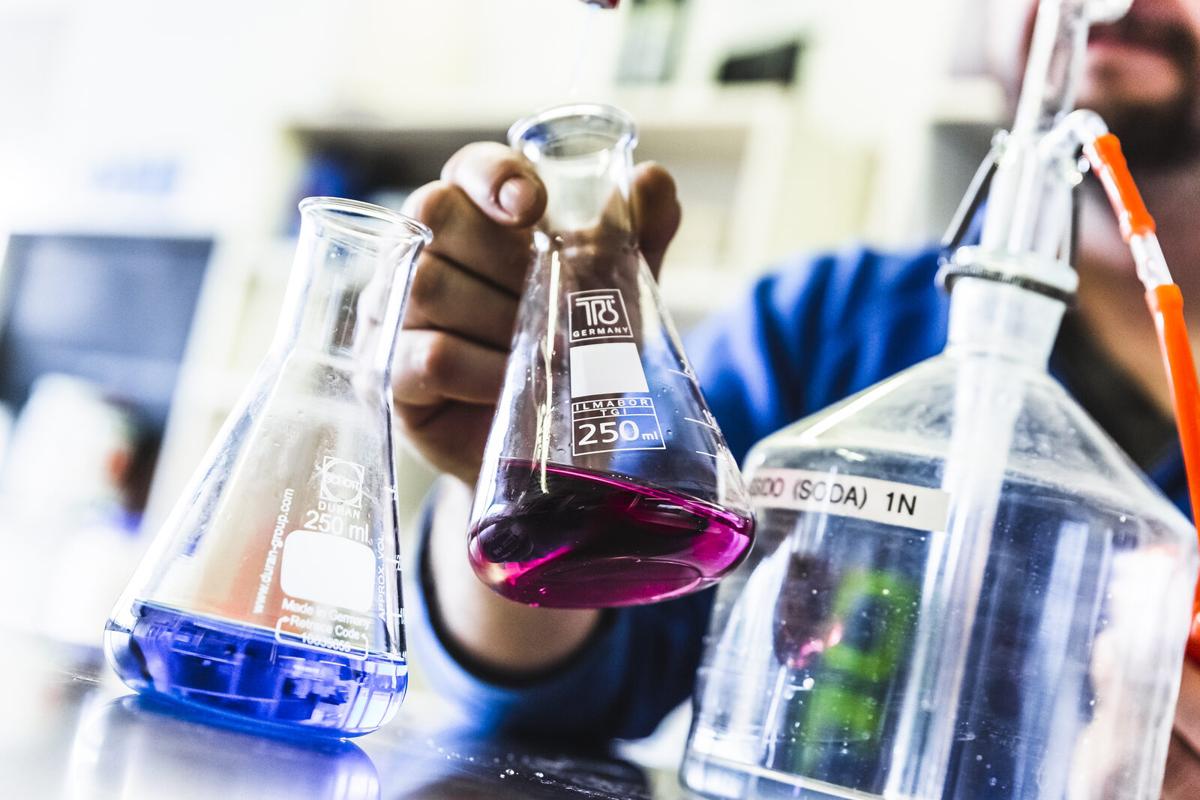
The chemical resistance of anodizing describes the behavior of the aluminum oxide layer when exposed to chemicals, aqueous solutions, solvents and aggressive environments.
Anodizing offers good general chemical resistance, but it is not a chemically inert coating: its performance strongly depends on pH, temperature, concentration and contact time. For this reason, chemical compatibility must always be evaluated based on the actual application.
Chemical nature of the anodic layer
The anodic layer consists mainly of aluminum oxide (Al₂O₃), obtained by electrochemical conversion of the base metal.
From a chemical point of view, aluminum oxide is an amphoteric oxide, meaning it can react with both acids and bases. This characteristic explains why anodizing:
- is stable in neutral or mildly aggressive environments
- shows intrinsic limitations in the presence of extreme pH values
The structure of the anodic layer is initially porous; sealing reduces permeability, but does not modify the chemical nature of the oxide.
Chemical stability range
The anodic layer has an optimal stability range:
- pH 4.5 – 8.5 → excellent chemical stability
- pH 3 – 4.5 → limited resistance, dependent on time and temperature
- pH 8.5 – 10 → limited resistance, dependent on time and temperature
- pH < 3 or > 10 → rapid dissolution
This range represents a technical guideline, not an absolute value: severe operating conditions can significantly reduce coating durability even within the nominally stable range.
General chemical compatibility
The following table provides an indicative evaluation of the chemical resistance of anodizing with respect to different categories of substances.
| Substance category | Resistance | |
|---|---|---|
| Organic solvents (hydrocarbons, alcohols, ketones) | ★★★★★ | Excellent |
| Neutral saline solutions | ★★★★★ | Excellent |
| Water and humidity | ★★★★★ | Excellent |
| Weak acids | ★★☆☆☆ | Limited |
| Strong acids | ★☆☆☆☆ | Poor |
| Bases (even diluted) | ★☆☆☆☆ | Poor |
Values are indicative: compatibility must be verified case by case.
Limitations of anodizing
Anodizing is not a chemically inert coating and has intrinsic limitations:
- it is not suitable for continuous exposure to extreme pH values
- it does not replace polymeric, ceramic or metallic coatings in highly aggressive environments
In the presence of strong acids, alkaline bases, high temperatures or prolonged contact times, degradation of the anodic layer is inevitable.
Cleaning and maintenance
Cleaning anodized aluminum components requires the use of compatible detergents to preserve the integrity of the protective layer and prevent its chemical degradation.
For routine cleaning, the use of neutral detergents with pH between 6 and 8, isopropyl alcohol, water with neutral surfactants or aluminum-specific detergents is recommended.
It is necessary to avoid the use of strongly acidic detergents (pH below 4) or strongly alkaline detergents (pH above 9), as well as bleach and hypochlorites, which can damage or dissolve the anodic layer.
Conclusions
Anodizing offers good chemical resistance in a wide range of applications:
- Excellent in neutral environments and with organic substances
- Limited in the presence of strong acids or strong bases
With proper treatment selection, appropriate sealing and evaluation of operating conditions, anodizing guarantees reliable performance in the food industry, medical and industrial applications.
For more information on specific chemical resistance for your application or to request compatibility tests, consult the Request Quote section or contact Durox technical support.
For applications in contact with food, the chemical resistance of anodizing takes on particular relevance in relation to aluminum migration and regulatory compliance. For further details, please refer to the dedicated section: Food contact