
Anodizing properties
Hardness and Wear Resistance
Hard anodizing of aluminum is a process that creates an aluminum oxide layer on the material's surface with hardness and wear resistance properties superior to those of natural anodizing. These exceptional tribological properties make hard anodizing comparable to hard chrome and superior to electroless nickel plating and steel.
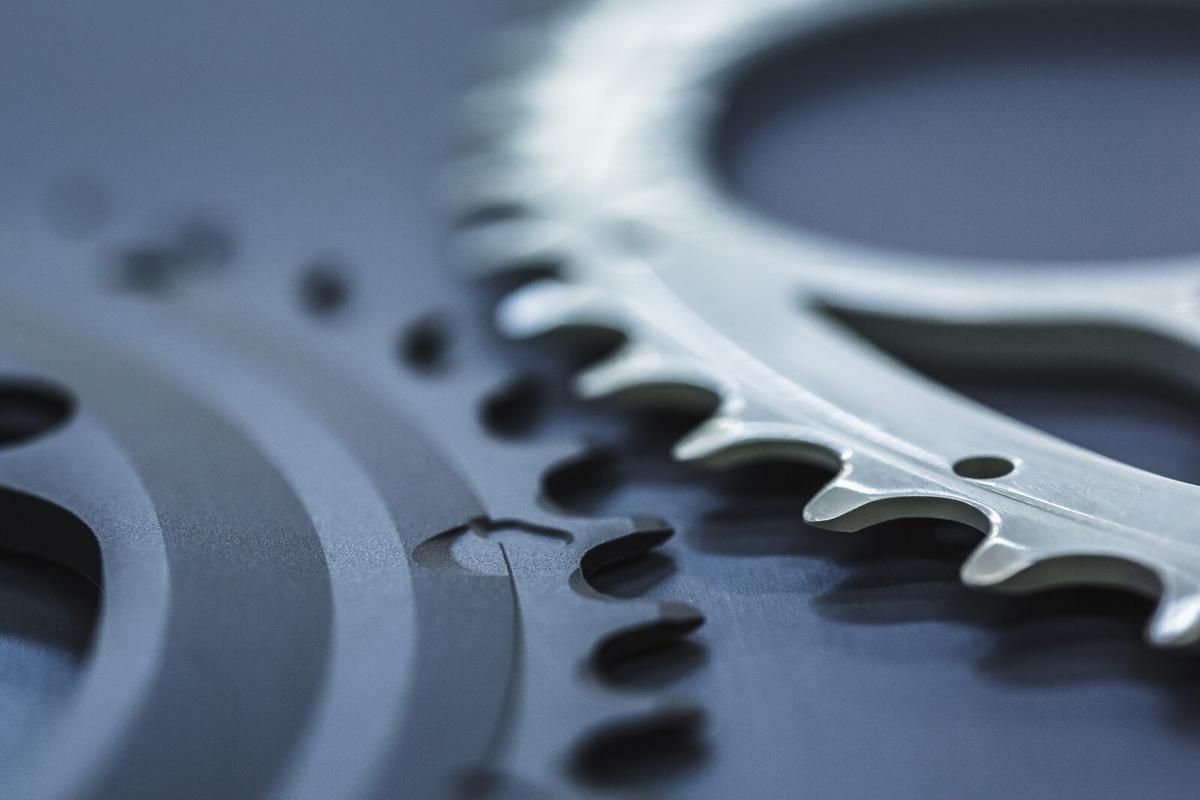
Surface hardness
The hardness of the hard anodizing layer varies significantly depending on the aluminum alloy used, since the coating derives from the conversion of the base material into oxide.
Hardness is measured according to ISO 4516, Vickers indentation, with a variable load depending on the anodizing thickness and its hardness, typically between 15 and 50 grams.
Hardness as a function of alloy - Hard Anodizing
6000 series alloys
Hardness: >400 HV
The 6000 series alloys are those that allow achieving the maximum hardness in hard anodizing. This exceptional result is due to the high aluminum purity that characterizes these alloys, which promotes the formation of very compact oxide with an optimal crystalline structure. Furthermore, the minimal content of elements that affect hardness contributes to maintaining high mechanical performance of the coating.
5000 series alloys (with Mg >2%) and 7000 series
Hardness: >330 HV
High magnesium content alloys (5000 series with Mg >2%) and 7000 series alloys offer high hardness, although lower than 6000 series. These alloys ensure good oxide formation, although the presence of alloying elements influences the coating structure.
2000 series alloys
Hardness: >280 HV
High copper content alloys show lower hardness compared to other series. This is due to the fact that the high copper content (>2%) limits the formation of compact oxide, generating a less uniform structure. However, performance can be improved using the OX-W treatment, which optimizes the process for these specific alloys.
Casting alloys
Hardness: >300 HV (for Cu <2%, Si <8%)
Casting alloys with appropriate composition can be anodized with acceptable results, although performance is generally lower compared to wrought alloys. The coating quality shows some variability depending on the specific alloy composition, making a case-by-case evaluation necessary to determine the material's suitability for treatment.
Hardness comparison table as a function of anodized alloy
| Alloy | Hardness HV | Notes |
|---|---|---|
| 6000 alloys and other wrought alloys except those below | >400 HV | Maximum hardness |
| 5000 alloys (with Mg >2%) and 7000 series | >330 HV | |
| 2000 alloys | >280 HV | Prefer the OX-W treatment |
| Casting alloys (Cu <2%, Si <8%) | >300 HV | |
| Other casting alloys | - | Hardness not determinable |
To relate an HV value to requirements expressed on other scales, use the HV, HRC and HB hardness converter. It provides quick access to the equivalences shown in the ASTM E140 table.
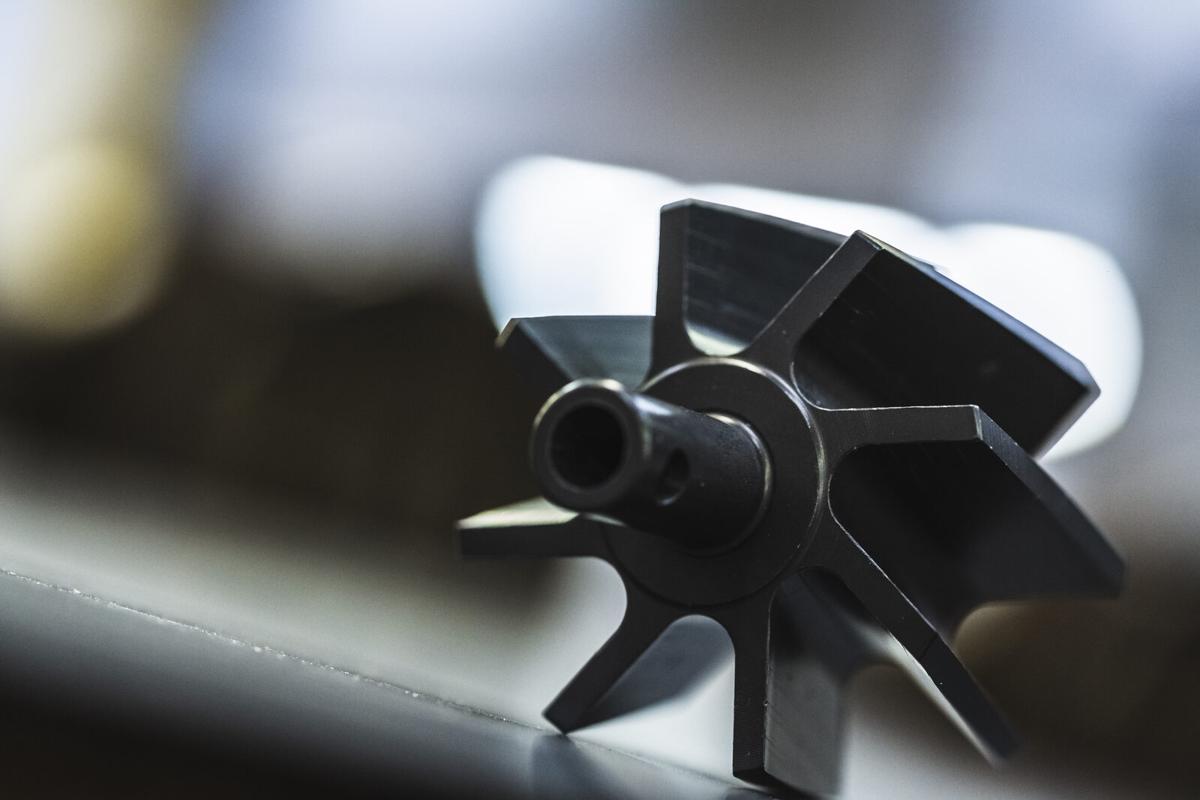
Wear resistance
Wear resistance is closely related to surface hardness, but also depends on other factors such as crystalline structure and oxide layer composition. For this reason, despite the hardness of hard anodizing (400-450 HV) being lower compared to other coatings such as electrolytic hard chrome (approximately 1000 HV), the performance in terms of wear resistance is comparable or even superior in many practical applications.
The standard test for evaluating the wear resistance of anodizing is the Taber Abraser according to ISO 10074 Appendix B.3 and MIL-PRF-8625F 3.7.2.2. The test is performed using the Taber Abraser instrument with CS 17 abrasive wheels and a load of 1 kg. The specimen is subjected to 10,000 cycles of abrasion, after which the component's weight loss is measured.
The interpretation of results is inversely proportional to performance: a low number indicates better performance, since the test quantifies material loss due to abrasive wear.
Wear resistance as a function of alloy - Hard Anodizing
6000 series alloys
Weight loss: <15 mg / 10,000 cycles
The 6000 series alloys offer maximum wear resistance thanks to their very compact structure, high hardness, and excellent resistance to both abrasive and adhesive wear.
5000 series alloys (Mg >2%) and 7000
Weight loss: <25 mg / 10,000 cycles
Very good wear resistance, intermediate between 6000 and 2000 series.
2000 series alloys
Weight loss: <35 mg / 10,000 cycles
The 2000 series alloys show acceptable wear resistance, although lower compared to other alloys. However, it is possible to obtain a significant improvement using the OX-W treatment, which optimizes the oxide layer structure.
Wear resistance comparison table as a function of anodized alloy
| Alloy | Max Weight Loss (ISO 10074) | Performance |
|---|---|---|
| 6000 Series | 15 mg | ★★★★★ |
| 5000 Series (Mg >2%) and 7000 | 25 mg | ★★★★☆ |
| 2000 Series | 35 mg | ★★★☆☆ |
Conclusions
Hard anodizing offers an exceptional combination of:
- High hardness (400-500 HV on 6000 series alloys)
- Wear resistance comparable to hard chrome
- Superior corrosion resistance
- Eco-compatibility (process without hazardous substances)
These characteristics make it the ideal choice for aluminum precision mechanical components subject to wear in multiple industrial sectors.
For more information on selecting the most appropriate treatment for your application, consult the OX Coatings section or contact technical support at Durox.