
Anodizing properties
Anodizable Aluminum Alloys
Anodizing can be performed on all aluminum alloys, both those from machining from solid stock, and those from extrusion, casting, die-casting and molding. However, the final characteristics of the coating vary significantly depending on the alloy used, especially regarding color, hardness, corrosion resistance and maximum achievable thickness.
The service
Durox srl anodizes wrought, cast and die-cast aluminum alloys with OX-A, OX-HS and OX-W treatments. Discover the aluminum anodizing service, the OX-HS hard anodizing page or contact Durox srl.
Coating formation mechanism
It is essential to understand that anodizing is a conversion process of the base material: the surface aluminum is transformed into aluminum oxide. The aluminum alloy therefore directly affects the formation of the anodic oxide layer.
This means that:
- Alloying elements other than aluminum (copper, silicon, magnesium, zinc) remain trapped in the oxide layer
- The greater the presence of alloying elements, the lower the amount of aluminum available to form the oxide
- Alloys with high content of alloying elements, such as high silicon content alloys, produce less compact and thinner coatings
- Alloying elements influence color, hardness and corrosion resistance of the final coating
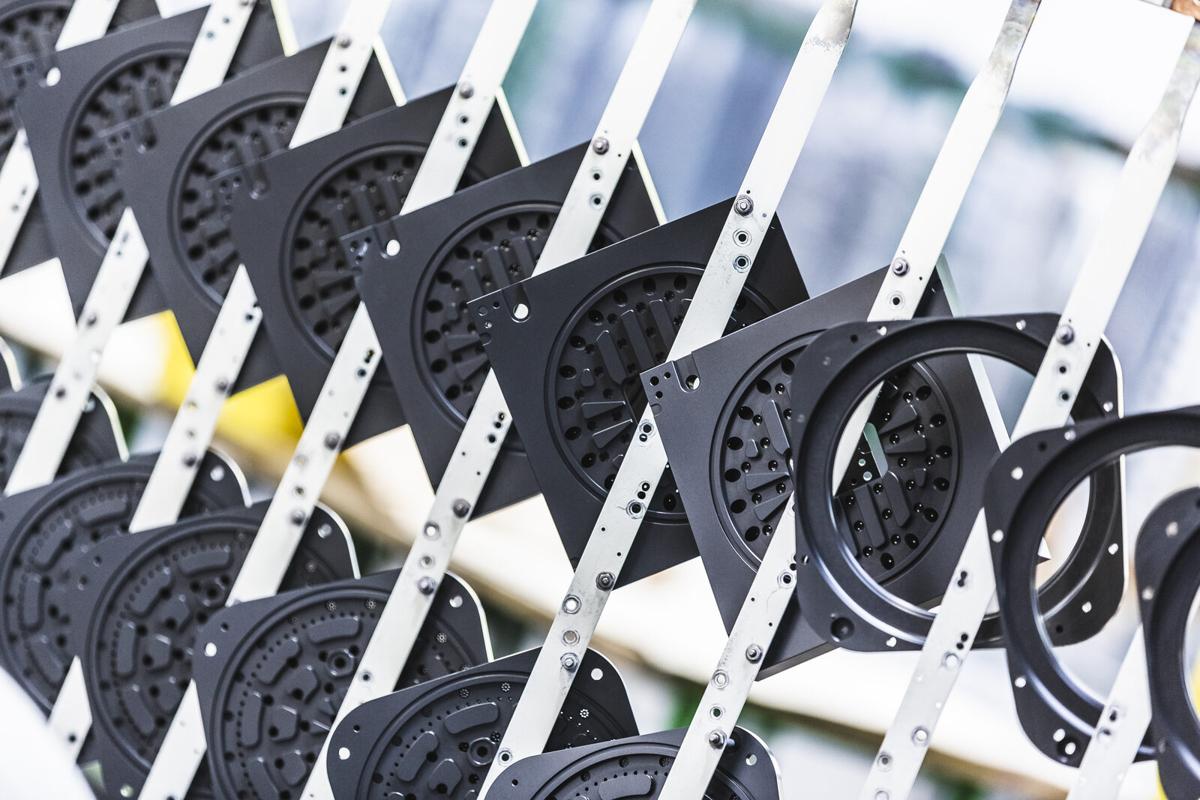
Wrought alloys
Wrought alloys are generally the most suitable for anodizing, particularly for obtaining high-quality hard anodizing.
6000 Series - Al-Mg-Si Alloys
The 6000 series alloys are considered the best for anodizing, particularly for hard anodizing.
Characteristics:
- High aluminum purity
- Excellent oxide layer formation
- Maximum achievable hardness (>400 HV, up to 500 HV)
- Excellent wear resistance (<15 mg Taber Abraser)
- Excellent corrosion resistance
- Uniform coloring
- High achievable thicknesses
Typical alloys: 6082, 6061, 6026, 6060, 6005, 6063
Peculiarities of 6082 and 6061 alloys: While being excellent for anodizing, these alloys may present a slight reduction in maximum achievable thickness compared to other 6000 series alloys due to higher alloying element content.
Applications: Precision mechanics, automotive, industrial machinery, structural components
5000 Series (with Mg >2%) and 7000 Series - Al-Mg and Al-Zn Alloys
The 5000 series alloys (with magnesium content above 2%) and 7000 series offer excellent characteristics for anodizing.
Characteristics:
- Good oxide layer formation
- High hardness (>330-350 HV)
- Good wear resistance (<25 mg Taber Abraser)
- Excellent corrosion resistance
- High achievable thicknesses
Typical alloys: 5000 Series: 5754, 5083 - 7000 Series: 7075, 7050
Applications: Aerospace, defense, high-performance components, competition bicycles
2000 Series - Al-Cu Alloys
The 2000 series alloys contain high amounts of copper (typically >2%) and present greater difficulties in anodizing.
Characteristics:
- Limited oxide layer formation due to high copper content
- Lower hardness (>250-280 HV)
- Moderate wear resistance (<35 mg Taber Abraser)
- Reduced corrosion resistance compared to other series
- Limited maximum thicknesses
- Coloring tending to bronze
- Requires special OX-W treatment for optimal results
Typical alloys: 2024, 2014, 2017
Solution: The OX-W treatment was specifically developed to improve performance on these difficult alloys, allowing to achieve superior characteristics compared to standard hard anodizing.
Applications: Aerospace, high-strength structural applications
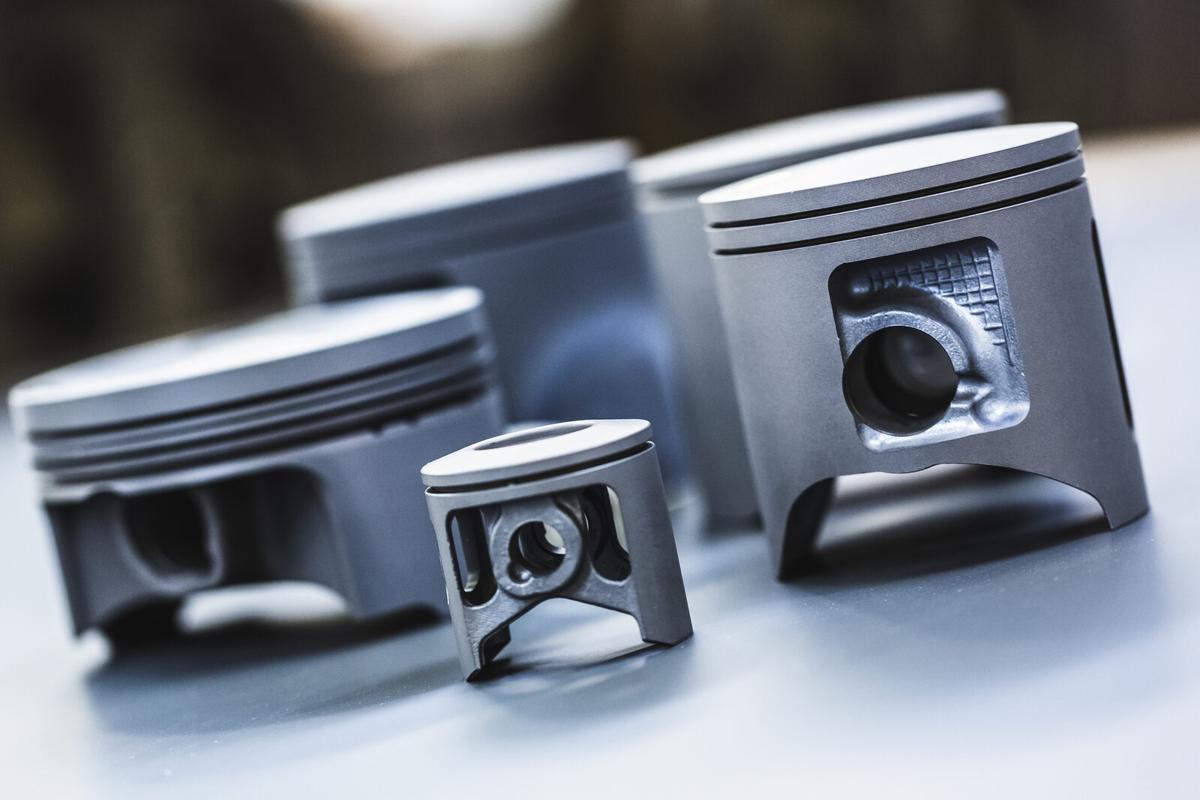
Casting and die-casting alloys
Casting and die-casting alloys present greater difficulties in anodizing due to high content of alloying elements, particularly silicon and copper.
Alloys with Si >8% or Cu >2%
Issues:
- Limited oxide layer formation
- Reduced hardness
- Limited wear resistance
- Modest corrosion resistance
- Very reduced maximum thicknesses
- Significant color non-uniformity
Solution: The OX-W treatment can significantly improve performance on these alloys.
Applications: Components with complex geometries, typically medium and large sized, where moderate corrosion and wear resistance are required. Examples: bases, crankcases, pump bodies, housings for industrial machinery.
Alloys with Si <8% and Cu <2%
Casting and die-casting alloys with limited silicon and copper contents can be anodized with acceptable results, but still inferior compared to wrought alloys.
Characteristics:
- Limited oxide layer formation
- Moderate hardness and resistance
- Possible color non-uniformities (to be evaluated case by case)
- Reduced maximum thicknesses
Solution: The OX-W treatment can significantly improve performance on these alloys.
Applications: Automotive components, engine crankcases, pump housings, valve bodies, industrial machinery parts, appliance components.
Summary comparison table
| Alloy Family | Hardness HV | Taber Wear (mg) | NSS Corrosion | Max Thickness |
|---|---|---|---|---|
| 6000 | >400 | <15 | ★★★★★ | ★★★★★ |
| 5000/7000 | >330 | <25 | ★★★★☆ | ★★★★★ |
| 2000 | >280 | <35 | ★★★★☆ | ★★★☆☆ |
| Casting Si>8% | - | - | ★★☆☆☆ | ★★☆☆☆ |
| Die-cast Si<8% | - | - | ★★★☆☆ | ★★☆☆☆ |
How to choose the alloy
For maximum coating performance:
Choose 6000 series alloys (6082, 6061, 6005). They allow to obtain:
- Maximum hardness and wear resistance
- Excellent corrosion resistance
- High thicknesses
- Uniform coloring
For high copper alloys (2000 series):
Preferably use OX-W treatment, which was developed to compensate for the limitations of these alloys.
For castings and die-castings:
- Verify chemical composition before specifying anodizing
- Use OX-W to obtain acceptable performance
For more information on the feasibility of anodizing on specific alloys, contact the technical support of Durox.